Wikipedia

Search results

Tuesday, October 15, 2019


KAMOTE LEAVES
(Sweet potato leaves)



HEALTH BENEFITS

Kamote tops can treat and prevent numerous diseases such as:

Helps in Heart Health
Enhances Eye Health
Helps in Bone Health
Normalize blood sugar level
 diabetes, cancer, kidney stones, liver diseases, hypertension, boils, acne, pimples, bowel movement problems, dengue fever, and kills bacteria causing diseases.

PROPERTIES

Anti-diabetic
Anti-mutagenic
Antioxidant
Anticoagulant
Anti-bacterial


Eating sweet potato leaves contains numerous nutrients, vitamins, and minerals, which has surprising and amazing health benefits to the body.

Sweet potato is a plant belong to the morning-glory family of Convolvulaceae. This plant bears a large, sweet-tasting, tuberous roots vegetable, which was mostly used for culinary purposes similar to a regular potato.

This plant can be usually found in tropical climate countries including the Philippines. Its crops were commonly used in making desserts, pastries, and different types of dishes in global cuisines, because of its sweet and delicious flavor.

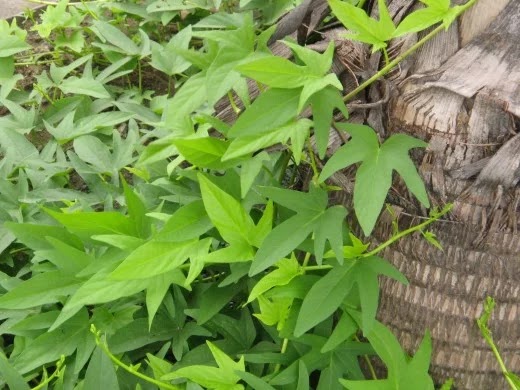
It is also a herbaceous perennial vine with an alternate heart-shaped leaves, which has been traditionally used by ancient people for medicinal purposes. Its leaves can be both used for cooking purposes and as herbal medicine.

Sweet potato leaves are also known as camote tops, which have been mostly consumed in the island in the Pacific Oceans including Asian and African countries. It is very effective in treating and preventing several types of diseases. It can be also used as the natural alternative to high-cost treatments and medications.

Its leaves contain nutrients such as dietary fiber, niacin, thiamine, beta-carotene, vitamins A, B, C, D, E, and K. It also contains minerals such as sodium, potassium, aluminum, boron, copper, calcium, zinc, magnesium, phosphorus, manganese, and sulfur.

It has also the ability to reduce blood sugar, cholesterol levels, prevent infections, and boosts the immune system. It also contains a lot of antioxidants that can help the body to fight free radicals, which can cause several types of diseases.

Monday, October 14, 2019


HIMBABAO LEAVES
(Broussonetia luzonica)


HEALTH BENEFITS

Normalize blood cholesterol level
Prevent coronary heart desease
Prevent stroke
Normalize blood sugar level


PROPERTIES

Antimicrobial
Antibacterial
Antifungal
Cytotoxic
Anti-cancer
Anti-inflammatory
Anti-oxidant
Anti-tumor
Antidiabetic


Himbabao is a medium-sized shed tree growing to a height of 15 meters with a trunk diameter of 30 centimeters. Bark is smooth. Leaves are alternate with a pointed apex and rounded base. Lower leaf surface is hairy. Flowers are very small, borne on long, slender, spike-like flowering branches. Inflorescences are pistillate and staminate borne on separate plants.

Himbabao is common in the Quezon area. Local describe two species by flowering and fruiting characteristics: Himbabao, with its long slender, spike-like flowers) and Himbabaong-lalaki, with its gray, puckered and wrinkled fruit. There is disagreement on whether it is a flower or fruit. There is also differing opinions on blogs: some referring to the fruit-bearing tree as male alukon and the spike flowering variety to alukon, and vice-versa. Or, perhaps, they are separate species.

Flower spikes are edible; used in meat and vegetable dishes like pinakbet and bulanglang. When cooked, the flower becomes gooey and slimy like okra.


In rural Quezon, excessive use of the flower or fruit is believed to cause elevation in blood pressure and aggravation of arthritis.

Wednesday, October 9, 2019


GABI LEAVES
(Taro Leaves)


BENEFITS

Reduces your cholesterol level
Aids in weight loss
Helps control blood pressure
Helps the development of the fetal brain and nervous system.
Helps prevent anaemia.
Helps reduce wrinkly skin.
Helps Increase sperm production.


PROPERTIES

Anti-Oxidant
Anti-inflammatory
Anti-cancer
hypolipidemic
Anti-diabetic
Antimicrobial
Antihelmintic
Antibacterial
Anti-Compulsive


Taro is kind of tropical countries’ plant which all of the parts are edible. The plant is originally from some south-east Asian countries. It becomes phenomenal because there are huge contents of nutrition in the leaves that humans need, so there are many health benefits of taro leaves. Besides, Taro is popular as one of the earliest plants which are cultivated and provide the main food for many people in numerous countries like African countries and of course Southern India. The name is also various like dasheen, dalo, cocoyam, elephant’s ear, kalo, kacchalo, etc.

The green leaves of taro have been widely used in a lot of Indian dishes. The taste is as similar as spinach but the leave can potentially be toxic due to raw consumption. The leaves provide calcium oxalate source which can trigger swelling and itchiness to the throat. Therefore, the leaves must be soaked all night and they must be cooked to avoid the toxicity.

Uses
Culinary / Nutrition
- Prized for its large corms or underground stems, used as staple food in many localities.
- Fresh edible leaves and petioles are a rich source of protein, ascorbic acid, dietary fiber, and some important minerals.
- The corms, petioles and leaf blades are good sources of vitamin B.
- To the early Hawaiians, grown mainly for poi production.
- Its easy digestibility makes it a great nutritional supplement for weight gain needs in cancer-cachexia, AIDS, pancreatitis and a miscellany of weight-loss conditions.
Folkloric
- Used for asthma, arthritis, diarrhea, internal hemorrhage, skin disorders.
- Juice of petioles sometimes used for earache and otorrhea.
- Juice of the corm used in alopecia.
- Leaf juice also used for internal hemorrhages, otalgia, adenitis.
- Internally, a good laxative. Also, used for piles.
- Also, used as antidote for wasp and insect stings. Leaf juice applied to scorpion stings and snake bites.
- Heated tubers are applied locally to painful rheumatic joints.
- Ash of the tubers, mixed with honey, is used for buccal aphthous stomatitis.
- Raw juice of gabi, mixed with sugar, used as febrifuge.

IMPORTANT NOTE:

Do not consume taro leaves as a raw vegetable or in their raw state.  They should be soaked first in clean water and then cooked for at least 10 - 15 minutes.

After that you have to cook them well to remove any toxic substances.

Tuesday, August 20, 2019


ATIS LEAVES


HEALTH BENEFITS

Kills hair lice
Lower blood sugar level
Scabies
Rheumatism
Wounds
Diarrhea
Dysentery
Liver aid
Stomachache


PROPERTIES

Anti-diabetic
anti-inflammatory


STEP BY STEP GUIDES ON HOW TO MAKE ATIS LEAVES TEA


Step 1: Take 10 pieces of atis leaves and wash them thorougly with clean water

Step 2: Put the atis leaves in a boiling pot and pour 1 liter of water

Step 3: Boil the atis leaves for 10-15 minutes

Step 4: After boiling the atis leaves, immediately remove the leaves or immediately pour the made tea into a container

Step 5: Let it cool the made tea before drinking and enjoy the benefits to our body.


Atis leaves comes from the plant which produce atis fruit. The fruit also well known as custard apples. It is sweet, creamy flesh and have oval round shape. The leaves believe can cure diabetic due to it benefit for the blood sugar level in human body. Therefore, consuming atis leave extract will benefit to reduce diabetic symptoms.
Atis plant is native to America and West Indies. But the plant is common is Asia region too, including in Philippines. The plant can reach up to 6 meters and has irregularly branches. To cultivate the tree also not difficult. It will grow well in a fertile soil with enough water. Hence, many people in tropical countries grow the plant in the backyard.

The leaves has anti-inflammatory properties and a soothing effect. Therefore, it helps to heal wounds caused by diabetic condition. It will soothe the ache inflammation which normally spread out in the diabetic patient. Furthermore, it will lead to fast recovery of diabetic wound. This is the same as health benefits of arnica as an anti inflammatory to the swollen inflammation.

Potassium and magnesium present in high quantities in these leaves. It is known to relax the muscles of the heart. Therefore, another health benefits of atis leaves for diabetes including to help in preventing the risk of strokes and heart disease. Which normally happen as complicated diseases due to diabetic condition.

Side Effects of Atis Leaves:
Even though there is some health benefits of atis leaves for diabetes, the leave also has some side effects. Below is some caution when decide to consume atis leave extract:

Atis leave may produce allergically reactions such as itchiness or redness. Therefore, sensitive persons with allergically history shall be carefully when consuming the extract.
Diabetic patient who frequently consume the extract shall be carefully not to drop the blood glucose level. Otherwise, it will cause nausea and dizziness due to the dropped blood glucose level.
Pregnant woman shall avoid this extract tea since it can lead to miscarriage. It is better to consume virgin coconut oil due to the health benefits of coconut oil during pregnancy.
Diabetic patient who consume the extract in the middle of the medical treatment shall consult with the medical practitioner first. Since the interact reaction of the extract can interfere the medicine result.
The main important content is vitamins and minerals inside the atis leave. Which can be beneficial for the diabetic. This is the different way with the fruits, which might be harmful for diabetic patient due to the high sugar content.


RAMBUTAN LEAVES


HEALTH BENEFITS

Fever
Helps digestive system
Kidney stone
Scabies
Diabetes
Lower cholesterol level
Good for the skin
Help maintaining good health of your scalp
Strengthening hair roots
Preventing or helping with hair loss
Solving problem and delay the production of white hair
A good natural pain killer
Helping with digestion problem.


PROPERTIES

Anti-oxidant
anti-microbial


HOW TO MAKE RAMBUTAN LEAVES PASTE FOR HAIR CARE:

Mash some rambutan leaves with your traditional mortar and pestle or if you don’t have one you can use any kind of tools like grinder make it into a pulp.
Add a little water (make sure it is not too much, just enough to moisten the mixture)
Filter it to get the extract.
You can now apply it to your scalp and hair. Use it regularly until the desired result is achieved.


HOW TOMAKE RAMBUTAN LEAVES TO TREAT YOUR FEVER:

Pick some rambutan leaves and left them to dry.
Take 15 grams of the dried leaves
Add three glasses of water to the dried leaves.
Boil the mixture.
Let it cool and strain it with filter.
Consume the brew three times a day to relieve the fever.


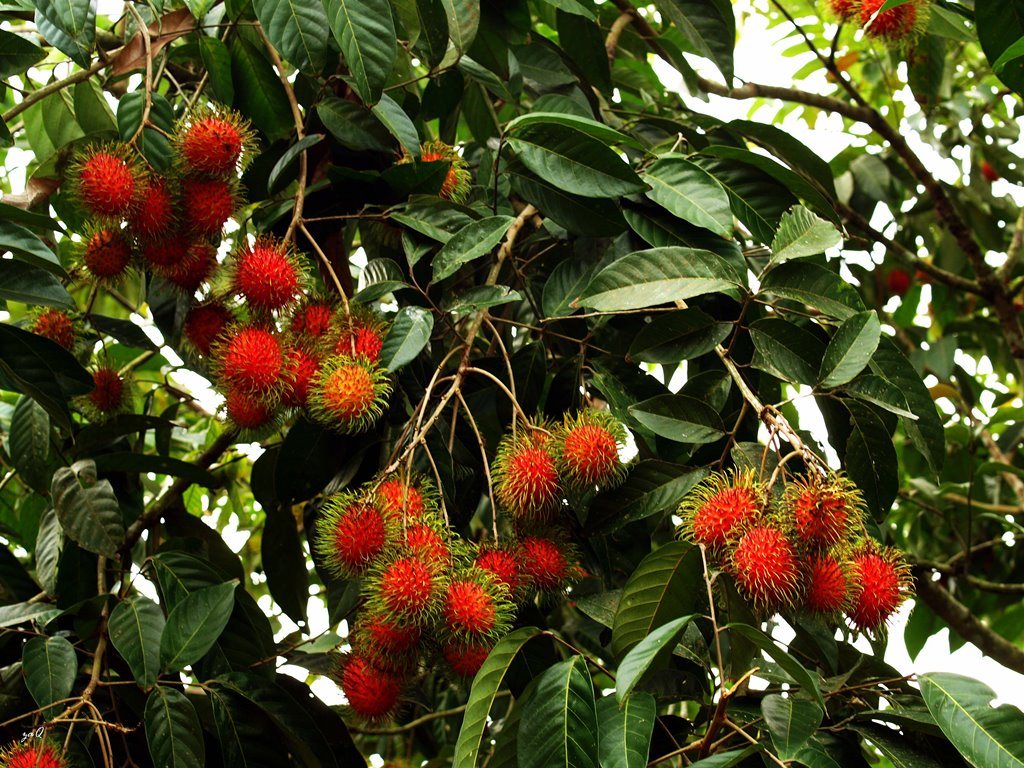
Health benefits of rambutan may be already familar, but how about benefits of rambutan leaves ? Being nominated as one of the world most “Exotic Fruit” Rambutan has proven to be more than what it was tagged with. Scientifically named as “Nephelium Lappaceumis” Rambutan come in a bundle in one stem. Physically, it looks a lot like its sibling lychee. Not to be mistaken though, rambutan has a striking physical difference, which is its hair. Yes, I prefer to call it hair instead of spikes since, these spikes are harmless and will not hurt your finger if you touch it. Lychee on the other hand did not have this hairy feature on its skin. Rambutan naturally grown in Southeast Asia and is popular among the locals as favorite ingredients or topping for a lot of types of dessert. Although the fruits gain the most recognition for being the popular sweets, it has not escaped from folks observation that the leaves are commonly used as a medicinal herbs and ointments.

Rambutan leaves are of an oval shape and ranged from dark green to yellowish green in color. The leaves come in a bundle of leaflets. The size of the leaflet varied from 5 to 15 centimeters in length and 3 to 10 centimeters in width.

The first and foremost thing that will come up to your mind, especially if you are familiar with the benefits of rambutan leaves is its properties in helping hair problem situation. But it surprisingly offers much more benefits than just that.

Read the procedures above on how to use rambutan leaves as a herbal medicine to cure your health conditions.


IPIL-IPIL LEAVES


HEALTH BENEFITS

Diabetes
Dewormer
Prevent insomnia
Cancer
Pain releiver
Eczema
Dandruff
Reduces mentrual pain
Pregnancy control
Improving blood circulation
Produce smooth skin
Removing acne and its scars


PROPERTIES

Chemopreventive
anti-proliferative
antihelmintic
antidiabetic
antibacterial
antidiabetic
anti-oxidant


STEP BY STEP GUIDES ON HOW TO MAKE IPIL IPIL LEAVES TEA

Step 1: Take 20 pieces of ipil ipil leaves and wash them thorougly with clean water

Step 2: Put the ipil ipil leaves in a boiling pot and pour 1 liter of water

Step 3: Boil the ipil ipil leaves for 10-15 minutes

Step 4: After boiling the ipil ipil leaves, immediately remove the leaves or immediately pour the made tea into a container

Step 5: Let it cool the made tea before drinking and enjoy the benefits to our body.


The Ipil-ipil tree is very abundant in tropical countries such as Thailand and the Philippines. Due it its abundance and resilient nature, Ipil-ipil tree has been described as “conflict tree”. On a brighter note, this tree is proven to cure various digestive illnesses.
Leucaena leucocephala or Ipil-ipil tree is considered as “Miracle Tree” because of its health benefits including its proven and effective way of deworming patients suffering from roundworms, flukes and tapeworms infesting inside their body.

Ipil-ipil is a small tree growing up 8 meters high. Leaves are compound, 15 to 25 centimeters long, with hairy rachis. Pinnae are 8 to 16, and 5 to 8 centimeters long. Leaflets are 20 to 30, linear oblong, and 7 to 12 millimeters long. Heads are solitary, at the axils of the leaves, long-peduncled, globose, and 2 to 5 centimeters in diameter, with many flowers. Flowers are whitish, in dense globule heads, 2 to 3 centimeters in diameter. Fruit is an oblong or linear pod, strap-shaped, 12 to 18 centimeters long, 1.4 to 2 centimeters wide, papery, green turning to brown and splitting open along two edges when mature, and several fruits developing from each flower head. Each pod contains 15 to 25 elliptic, compressed, shining, brown seeds, each 5 to 8 millimeters long, 3 to 5 millimeters wide.

Side effect of ipil ipil leaves
There is not any side effect caused by consuming ipil ipil leaves. However, we may not know if it reacts differently in every kinds of human’s body. In addition, for people who suffers allergy from peanuts better avoid consuming ipil ipil. If you are having any medication treatment better always discuss with your doctor if you consider to consume ipil ipil for we might not guarantee whether it will react badly to your medication or not.

That’s all about the healthy benefit of ipil ipil leaves toward our body. Besides all of the health benefits of ipil ipil leaves above, there are still many benefits that it provided. To know the real benefits of this plant, I suggest you to try it by yourself and encourage the other to try consuming it if you get the positive impact from it. Keep reading and stay healthy!


BALBAS PUSA


HEALTH BENEFITS

Kidney stone
Liver and Bladder problem
Urinary tract infection
Renal inflammation
Dysuria
Toothache
Body pain
Fever
Lower blood presure level
Lower cholesterol level
Rheumatism and gout
Diabetes
Asthma
Cough


PROPERTIES

Anti-allergic
Anti-hypertensive
Anti-inflammatory
Anti-oxidant


STEP BY STEP GUIDES ON HOW TO MAKE BALBAS PUSA LEAVES TEA

Step 1: Take 15-20 pieces of balbas pusa leaves and wash them thorougly with clean water

Step 2: Put the balbas pusa leaves in a boiling pot and pour 1 liter of water

Step 3: Boil the balbas pusa leaves for 10-15 minutes

Step 4: After boiling the balbas pusa leaves, immediately remove the leaves or immediately pour the made tea into a container

Step 5: Let it cool the made tea before drinking and enjoy the benefits to our body.

Note: Drink balbas pusa tea 3 glasses in a day.


Cat's whisker or Balbas pusa (Orthosiphon aristatus) is a tropical herbaceous perennial plant that is native in Southeast Asia usually found in China, Taiwan, Philippines, Thailand and even in Australia. Balbas pusa, commonly referred to as Java tea is a herb used as medicine for many centuries.

Orthosiphon aristatus (balbas pusa) is an erect, slender shrub that can grow 1-2 meters in height. The leaves are semi-deciduous, light to dark green in color and are borne in distant pairs that is about 5-10 cm long.. The stalk is reddish-brown, that is slightly puberulent. The flowers forms a pagoda like shaped with 5-6 cm long stamens that resembles a cat’s whiskers, hence the name 'balbas pusa' in tagalog and 'cat's whisker' in english. The color of the flowers varies from white to purplish.

Warnings and Side Effects
Java tea or balbas pusa tea has no known and reported contra indications and side effects with other drugs. While it is generally safe to take java tea or balbas pusa tea, prolonged intake is discourage as this may cause low sodium serum in the body.

Pregnancy and Breast feeding. There are no sufficient studies made to determine the side effects of java tea (balbas pusa tea) taken in medicinal amounts to infants and babies. Stay on the safe side, avoid taking balbas pusa in herbal medicine dosages when pregnant and while breast feeding

Allergies. In rare cases, the herb has caused allergic side effects.

Fluid retention. Don’t use java tea as “irrigation therapy” when fluid retention or edema is due to kidney or heart related problems.